The Tenner Shelf: How to Work a UK Car Boot Before Breakfast
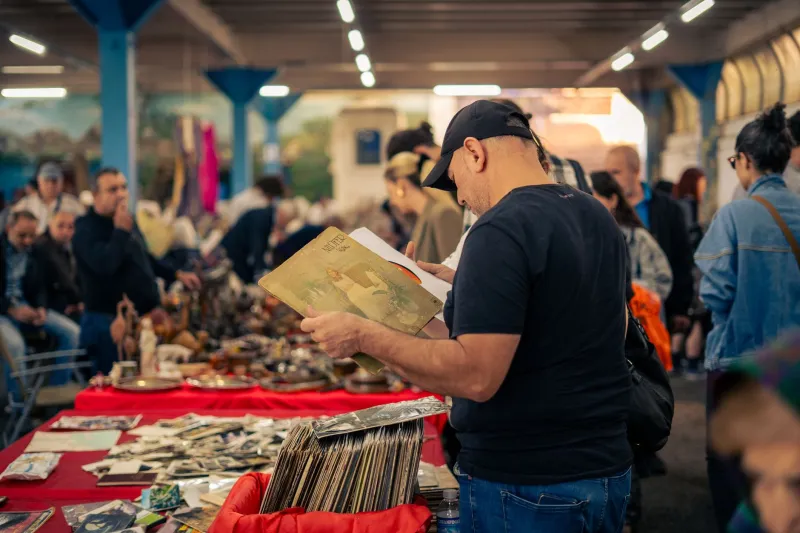
The first torch beam across a wet trestle table is worth more than any saved search. It catches the corner of a sleeve, a laminated spine, a box marked ‘LP records, 50p each’ in biro. By 8am the dealers will have been through it. By 9am the bloke who only wants Beatles will have bought the one interesting thing and left the rest. At 6:30, in the dark, with a flask going cold in your bag, a tenner still buys a story.
Why the alarm is still the whole game
UK car boots have not got easier. Sellers are wise now. They Google before they set out, or their nephew does. But the early hour does something that no online listing can: it puts you in front of a person who wants the boot empty and the car home. The first hour is house clearance logic, not collector logic. That is why the best crates surface before the market has properly woken up — not because the records are better, but because the pricing has not caught up with the objects yet.
Go in November and you get the other advantage: damp, cold and low turnout. Sellers are keen. Buyers stay in bed. A wet Saturday in a field outside a provincial town can be more productive than a dry summer Sunday with a queue at the gate. Take a torch. Take gloves. Take the kind of tote that will not split when you put twelve LPs in it.
Reading the table from ten paces
You do not need to touch a record to know plenty about it. Start at the edge of the pitch. A table with a hundred LPs in supermarket bags, all spines out and nothing alphabetised, is a house clearance — good. A table with forty LPs in perfect order, each one poly-sleeved and priced from a mental catalogue, is a collector having a clear-out — also good, but you are not getting a bargain without a conversation.
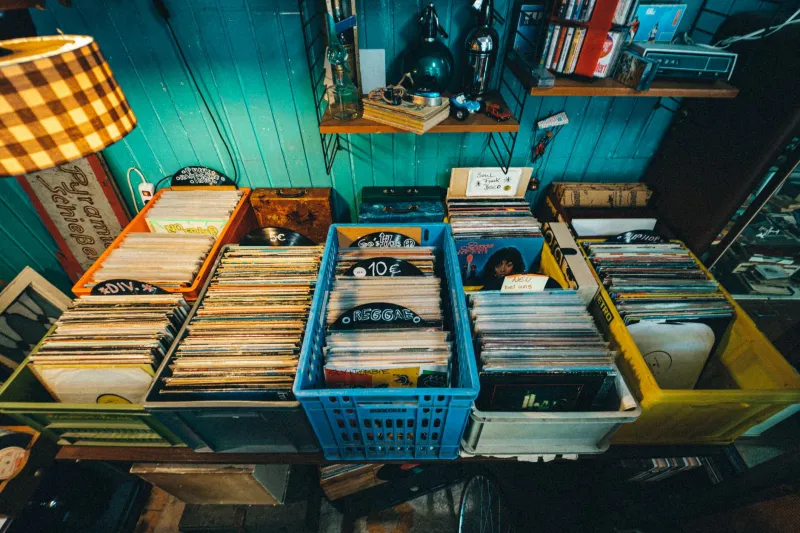
Look at the boxes. Fruit crates and mushroom trays mean volume and speed. Proper record boxes with reinforced corners mean someone knows what they are doing. Look underneath the table. The second box is where the seller puts the things they are not sure about. Ask politely if you can have a look. The answer is almost always yes.
Look at the spines, not the front covers. Spines tell you label, catalogue number and era in one glance. A row of Decca Eclipse is not the same as a row of Topic. A box of Reader’s Digest sets is not a box of library music, however similar the cardboard smells. If you see a run of white spines with a small logo at the bottom, slow down. That is where the private presses hide.
The tenner shelf: what to pull
This is not a guide to rare records. It is a guide to cheap records that reward a second spin. UK private press LPs from the 1970s and 1980s turn up in car boots because they were pressed in small numbers for churches, schools, folk clubs and wedding bands. Look for SRT custom pressings, Deroy, Hollick & Taylor, Sentinel. They are not all good. But the folk ones — quietly recorded, badly pressed, honest — often are.
Library music is the other rich seam. KPM, De Wolfe, Boosey & Hawkes, Chappell, Bruton, Themes. You will mostly find the later, cheaper ones, but even those have drums, flutes and synth squelches that sample heads will pay proper money for. Check for the word ‘library’ on the sleeve or the label. Check for composer names you do not recognise. Check for a running time instead of song titles.
Folk is where the tenner goes furthest. Topic, Transatlantic, Village Thing, Xtra, Folk Heritage. A scuffed Topic LP with a typed sleeve note and a photograph of three people in a kitchen is worth carrying home. Avoid the obvious big-band dance records unless you want them. Avoid anything that smells of vinegar. Avoid warped vinyl — hold it up to the sky and look along the edge. A slight dish is playable. A taco is not.
Kit, cash and car-boot etiquette
Cash is still king. Bring fives and pound coins. A seller with a bum bag does not want to break a twenty at 6:45. Bring a strong tote, a microfibre cloth, a phone torch and a written want list — not on your phone, on paper, because your hands will be full. Bring hand sanitiser. Bring a flask. Bring nothing you are not prepared to carry for two hours.
Etiquette matters more than technique. Ask before you pull a stack apart. Do not stand in front of a table and read every sleeve while someone else waits. If you make a pile, say so — ‘I’m having these, just looking’ — and keep it small. When it comes to money, bundle. ‘What can you do on these six?’ is fair. ‘I’ll give you a quid for the lot’ is not. If the seller says no, put it back where you found it and move on. The car boot is a small world. People remember.
The last place a tenner buys a story
You will not always find gold. Some mornings you come home with two LPs, a damp sleeve and a story about the seller’s uncle who played in a folk club in 1974. That is still a result. The car boot is not a shop. It is a field full of people clearing space, and the records are the least important thing on most tables until someone like you stops and looks.
So set the alarm. Get there for half six. Work the tables from the outside in, keep your tenner ready, and do not wait for the dealers to wake up. They will. You just want to be the one holding the SRT private press when they do.