Scuff Marks and All: The Case for Buying Sleeves That Have Lived
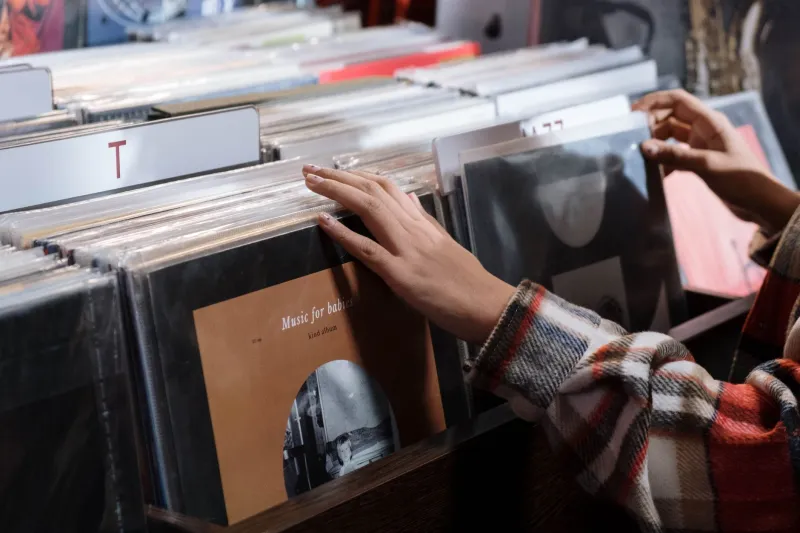
There is a particular look that comes over a certain kind of collector when they pull a record out of a crate and see a seam split. The lip curls. The record goes back. The hunt continues. And somewhere behind them, a perfectly playable copy of an album they actually want sits in the rack, priced at a third of the 'near mint' example two rows over, because its cardboard has done some living.
This is a mistake. Not a small one either. Across UK record shops, charity shops and fair stalls, the obsession with pristine sleeves is quietly shrinking the pool of affordable records and teaching a generation of collectors to confuse condition with value. A scuffed corner is not a defect. It is proof that somebody loved the thing enough to carry it around.
The counter doesn't grade your memories
Ask any dealer how they price a record and you'll hear the same word: grade. But behind the counter, grading is less of a science than a negotiation with reality. A sleeve with a seam split is technically 'good' or 'good plus' on paper. In practice, it depends on who is doing the looking and what they had for breakfast.
'If I knocked money off for every bit of ring wear, I'd be giving records away,' says Mick, a stallholder who has been setting up at Leeds record fairs since the late 1990s. 'I've had people turn their nose up at a sleeve with a bit of scuffing and then pay twenty quid more for the same record online with a shiny cover and a warp you could skateboard on. The sleeve is not the record. The record is the record.'
That distinction gets lost. A seam split — where the glued edge of the sleeve has given way — is cosmetic. It does not affect playback. It does not warp the vinyl. It does not introduce surface noise. It just means the cardboard has been opened and closed a few hundred times, which is roughly what happens when a record is actually enjoyed.
What the charity-shop volunteer knows
Down the road from the gleaming specialist shops, the charity sector is doing some of the most honest grading in the country. Volunteers at British Heart Foundation and Oxfam music shops are not trained in the finer points of Goldmine grading. They are trained in common sense.
Doreen, who volunteers at a British Heart Foundation shop in Bristol, puts it plainly: 'If it plays, it goes out. If the cover is tatty but the record is clean, we might put it in the bargain box. People still buy them. Students, mostly. Or people who just want to hear the music without paying collector prices.'
That bargain box is a passport. It is how a 19-year-old with a cheap turntable and a growing curiosity ends up taking home a 1970s folk LP or a second-hand copy of a Factory Records classic they would never have touched at full collector price. The battered sleeve is the reason the record is still in circulation rather than stuck in a glass case or a storage unit.
A seam split is a discount, not a dealbreaker
Priya, a gig-goer from Manchester who has been buying vinyl since she was a teenager, has a rule: 'If the vinyl is clean and the price is right, the sleeve can look like it has been through a washing machine. I'm not framing it. I'm playing it.'
She is not alone. The rise of online grading culture — where every micro-scuff is photographed and catalogued — has convinced many collectors that anything less than near mint is a compromise. But the records that actually get played, traded and talked about are rarely the pristine ones. They are the ones with the corner cut, the price sticker residue, the faint ring of a thousand shelf-sittings.
Those marks are not damage. They are biography. That sellotaped spine? Somebody fixed it because they wanted to keep it. That name written on the back? A previous owner claiming it as theirs. That creased corner? It went to a party in 1987 and came back with a story.
The sleeve is part of the record
None of this is an argument for buying mouldy, water-damaged records with sleeves that have turned to pulp. There is a line. But a seam split, some scuffing, a bit of ring wear — these are the everyday signs of a record that has been handled, loved and kept alive.
In 2026, with new vinyl prices climbing and charity-shop shelves thinning out, the beaten-up sleeve is one of the last affordable routes into a real collection. It is the difference between a crate that only wealthy collectors can raid and a scene that still lets a kid walk in with a tenner and walk out with something worth hearing.
So next time you pull a record out and see a seam split, don't put it back. Check the vinyl. Ask yourself if you actually want to hear it. If the answer is yes, pay the man, take it home and play it. The sleeve has already done its job. It got the record to you.