Scratched Signatures: Decoding the Secret Language of UK Dead Wax
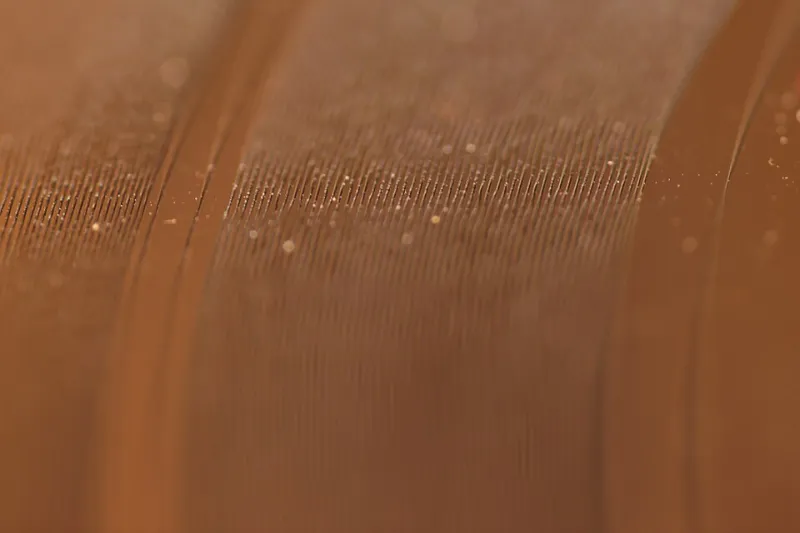
Photo: Feelthelie, CC BY-SA 3.0, via Wikimedia Commons
Ask most people what is on a record and they will say music. Ask a crate digger and they will say fingerprints, sleeve wear and, if you are lucky, a message from the person who cut it. The runout groove — the smooth, unmodulated band between the last track and the label — is the record's private paperwork. In the UK it is part archaeology, part gossip column, and it is sitting there for free on every second-hand LP you pick up.
At Splid Records, the runout is part of the dig. It is the bit of the object that tells you who made it, where it was pressed and roughly when it left the building. You do not need a laboratory. You need a lamp, a loupe and a bit of patience.
The Dead Wax Is a Paper Trail
Dead wax, runout, trail-off: call it what you like. It is the bit the stylus never plays, and it is where the manufacturing chain leaves its marks. Mastering engineers scratched or stamped their signatures there. Pressing plants added their own identifiers. Quality controllers added stamper numbers. Sometimes someone added a joke.
In the UK, the markings were never standardised. That is what makes them useful. A London lacquer cut for an independent label might carry a hand-etched engineer's name and a catalogue number. A major-label pressing might carry a stamped plant code and a date. A reissue might carry both, plus a new mastering credit. Read the whole string and you have a rough biography of the copy in your hands.
First, Learn to Look
Take the record out of the sleeve, hold it under a bright lamp and tilt it until the light rakes across the surface. A phone torch works, but a cheap jeweller's loupe is better. Look for letters, numbers and symbols scratched or stamped between the label and the last groove. Photograph them before you clean anything. Do not scrub at the runout with a cloth; the markings are shallow and ink-free, and a heavy hand can dull them.
Write down the whole string, including spaces and slashes. A typical UK runout might read 'ABC 123 A//1' on one side and 'ABC 123 B//1' on the other. The catalogue number is the easy part. The rest is the story.
The Signatures That Send Collectors Hunting
Mastering engineers have signed their work for decades. In the UK, a handful of names are catnip to collectors. George Peckham's 'A Porky Prime Cut' is the most famous; find it on a 1970s rock LP and the seller usually knows it. Denis Blackham's 'BilBo' marks, John Dent's 'Jonz', Miles Showell's 'Miles', Noel Summerville's 'Noel' and Stuart Hawkes's 'Stu' all carry weight. They tell you who cut the lacquer, often where, and sometimes what they thought of the session.
These are not proof of quality by themselves. A Porky cut is not automatically better than a later cut, but it is a different cut, often from an earlier generation of tape, and that matters to ears and wallets. Collectors hunt the signature because it narrows the field: this copy came from that lacquer, cut by that engineer, at that point in the chain.
Plant Marks and Date Codes
Plant identifiers are the other half of the puzzle. 'DAMONT' points to Damont Pressings in Hayes, Middlesex; 'ORLAKE' to Orlake in Essex; 'MPO' to the French plant that pressed plenty of UK releases; 'CBS' and 'EMI' marks turn up on major-label pressings. Mother and stamper numbers — the little '1 1' or '2 3' after the matrix — tell you which stamper made your copy. Earlier numbers generally mean an earlier run.
Date codes can be cryptic. A string like '10 JA 87' usually means 10 January 1987; '1 6 86' can be 1 June 1986. They are not universal, but when you see them they can date a pressing to the month. That is gold when a seller is calling a 1980s reissue an original.
Voices from the Lacquer Room
Mick Harper, a UK mastering engineer who has cut lacquers for independent labels since the late 1990s, says the dead wax is the only part of the record that is not designed for the listener. 'It is a workshop note,' he says. 'You are talking to the next person in the chain — the plant, the quality controller, sometimes just yourself. A lot of it is practical. A lot of it is boredom. A little of it is vanity.'
Sandra Bell, who spent years on the shop floor at a Midlands pressing plant, says the plant marks were a form of internal accounting. 'Every stamper had a life, and every mother had a history,' she says. 'If a run went wrong, you could trace it back through the codes. Collectors think it is romance. For us it was paperwork with a time limit.'
She adds that engineers sometimes left jokes for each other. 'You would find a name, a date, a rude word, a football team. It was a way of saying I was here. Nobody thought anyone would be reading it forty years later.'
What It Means for the Crate
In 2026, dead wax is one of the few bits of record-buying information that has not been flattened by the internet. Discogs and 45cat are useful, but the runout is the object speaking for itself. A UK first pressing with the right engineer, plant and stamper code can carry a premium of a few pounds or a few hundred, depending on the record. A later cut with the same sleeve is a different artefact.
That does not mean you should become a runout snob. Some of the best cheap records in charity shops have nothing but a matrix number and a date. The point is to read what is there, not to invent a hierarchy. If a record sounds good and the dead wax tells you it was cut at a particular room on a particular day, that is a small connection to the people who made it.
A Field Kit for the Shelves
Keep a small torch, a loupe and a notebook in your bag. Photograph runouts in good light and file them by artist. Learn the big UK signatures first, then the plant codes, then the date formats. Cross-check with online databases, but trust the object. And when you find a message that has nothing to do with the music — a name, a joke, a dedication — leave it alone. It is not damage. It is the record's handwriting.
Next time you pull a UK pressing from a crate, flip it over before you hand over your cash. The dead wax is not dead. It is the label's backstory, scratched in by hand.