Small Groove, Big Noise: In Defence of the Ten-Inch Record
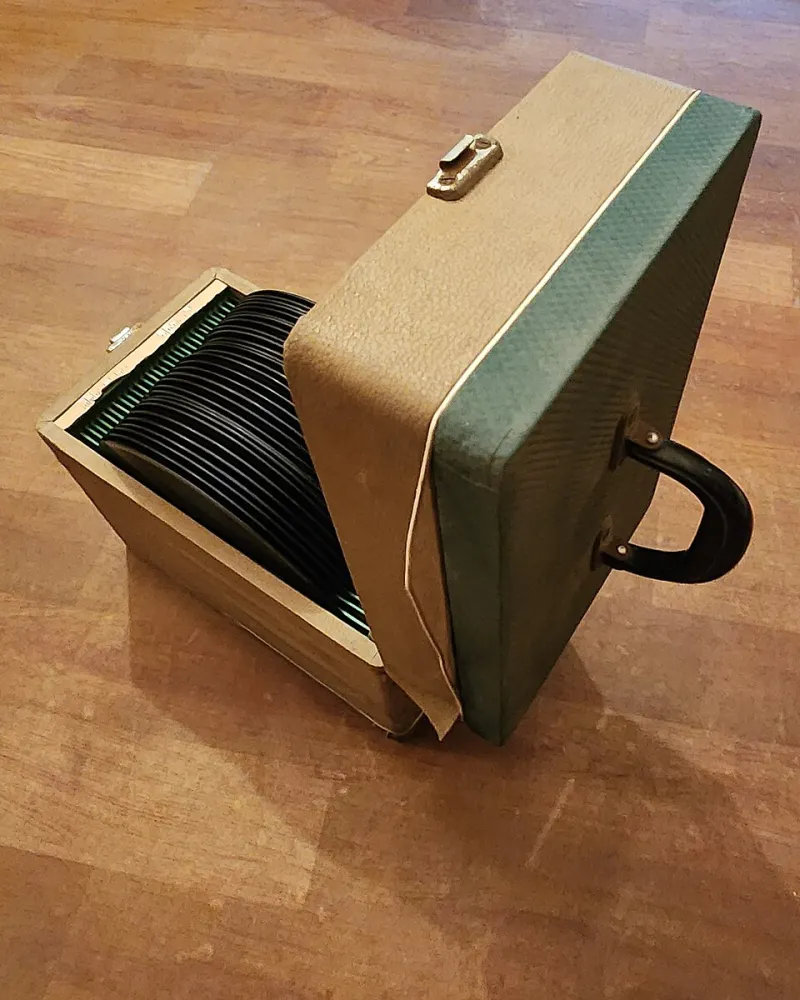
Photo: Amitbalani, CC0, via Wikimedia Commons
There is a rack in most second-hand shops where the ten-inches live. It's usually at the end, low down, and it's usually dusty. A few EPs nobody's filed properly, a couple of picture-disc oddities, one jazz comp with a sleeve that's fallen apart. Everyone walks past it. I've walked past it. That's a mistake, and I think 2026 is the year the mistake becomes expensive.
The format that fits nothing
Let's be honest about why the ten-inch gets ignored: it's an awkward size. Twelve-inch sleeves are the standard, seven-inches are cheap and cute, and the ten sits in between with no obvious home on the shelf. Half the shops don't have a section for them. Half the collectors I know have never bought one deliberately.
And yet. It holds about twelve to fifteen minutes a side — enough for an EP, a live set, a dub plate, a four-track mini-album, a remix package. It's smaller and cheaper to press than a twelve, bigger and more serious than a seven. It forces the artist to be economical in a way that a full LP simply doesn't. You cannot fill a ten-inch with filler, because there's nowhere to put it.
Four labels making it work
Over the last eighteen months, a handful of UK independents have quietly started using the format as a deliberate choice rather than a compromise.
Halcyon Grot (Bristol) have made the ten-inch the entirety of their catalogue. Their fourth release, a three-track dub excursion from a soundsystem crew out of Easton, is pressed loud, cut at 45, and sounds absolutely enormous for the size of the disc. "It's the little runs that keep us alive," says the label's Tom Wren. "A 300-run on a ten is achievable on a shoestring. Nobody's going to do that on an LP and nobody's going to get a twelve out on time."
North Laine Tapes & Discs (Brighton) use the format for their split series — two artists, one side each, deliberately shorter than the seven-inch pairs everyone else does. It's the only release schedule they've kept to for three years straight.
Fenland Frequencies (Cambridge) are pressing archival folk and field recordings from the Fens, and the ten suits the material: two long pieces, one per side, with the sleeve notes printed on the inner rather than crammed onto the back. The audio does the talking.
And then there's Bell Foundry Sound (Glasgow), who make the argument most persuasively. Their new series of dub plates for sound system nights is cut on ten, not twelve. Fewer copies, quicker turnarounds, and — crucially — they fit in a record bag with room to spare. "A twelve warps in a sweaty bag," says engineer Mhairi. "And nobody wants to carry six twelves to a dance. Ten is the working size."
The cost and the awkward truth
The economics are genuinely favourable. A ten-inch pressing is cheaper than a twelve by enough to matter on a small run, though not by as much as you'd hope — the plate costs and the cutting time don't shrink with the disc, so a 100-run sits closer to a twelve at that scale than the size suggests. Where the ten really wins is on a 300 to 500 run, where the saving per unit becomes the difference between breaking even and not.
Then there's the sleeve problem. Most pressing plants price the ten-inch sleeve awkwardly — it's a bespoke size, so you're often paying twelve-inch money for ten-inch packaging. Labels get round this by using printed inners, simple card sleeves or hand-stamped paper. Bell Foundry's plates come in a plain white sleeve with a rubber stamp and a photocopied insert, and somehow that's the most desirable thing on the shelf.
The other quirk is the speed. A lot of ten-inches are cut at 45rpm for loudness, which means a shorter side and a wider groove — great for bass, less great if you're trying to squeeze a fifteen-minute epic onto it. Anyone pressing a ten has to think about it properly. That's not a bug. That's the format doing its job.
Why it's a crate-digger's secret weapon
Here's the actual argument, and I'll make it plainly: the ten-inch is the last underpriced corner of the second-hand market.
Twelves have been picked over by DJs for decades. Sevens are cheap but limited — you rarely get a full picture of an artist from one. LP prices in 2026 are frankly silly, and charity shops have wised up to the point where even battered copies are marked at a tenner. But the ten-inch rack is still where dealers leave things because they don't know how to price them and don't think anyone's looking.
They're wrong. The jazz, dub and reggae ten-inches from the seventies and eighties are exceptional value — often pressed loud, often on labels that only existed for a handful of releases, and usually in far better condition than the same records would be on twelve, because they were bought by people who played them at home rather than in a basement.
How to shop the format
- Check the label, not the sleeve. Ten-inch sleeves fall apart first. Flip the disc; near-mint vinyl inside a torn sleeve is normal and fine.
- Look for 45rpm dub plates and soundsystem cuts. They're cut hot and they're often the best-sounding thing in the shop for two or three quid.
- Don't dismiss the picture discs and flexi-era curios. Yes, some are novelty. Some are the only physical release an artist ever got.
- Buy new ones. The labels above are pressing small runs to order. If we don't buy them, the format goes back on the low shelf and nobody finds anything interesting there for another decade.
The small format argument
The ten-inch has never been the sensible choice. It's too big for the singles bin and too small to compete with the LP, and it's never had a marketing story behind it. That's precisely why it's worth your attention now. It's the format where artists can be weird, where labels can move fast, and where a crate-digger can still find something nobody else has bothered to pick up.
Go and look at the bottom shelf. Take a chance on the dusty rack by the door. The ten-inch isn't coming back — it never really left. It's just been waiting for us to stop walking past it.