The Sticky-Note Stash: Inside the UK Record Shop's Off-Rack Economy
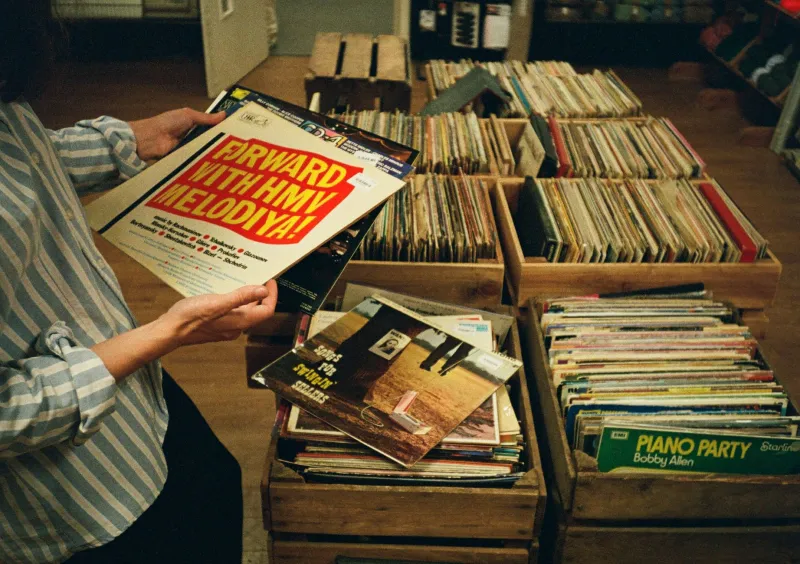
There is a particular sound a UK record shop makes when you ask the wrong question. Not a refusal, exactly. More a pause, a half-smile, a hand flattening a sleeve against the counter as if to say: not this one, mate. You have found the off-rack economy. The stash behind the desk. The pile with the sticky note that says MINE in biro.
Every shop has one. Sometimes it is a proper shelf under the till. Sometimes it is a milk crate by the staff kettle, or a stack of twelve-inches leaning against the wall in the back room with a cardboard sign that reads HOLD. Sometimes it is just three records in a carrier bag behind the counter, which everyone knows about and nobody mentions. In 2026, with racks tighter and prices jumpier than ever, these private stashes matter more than most punters realise.
The shelf that never gets priced
Staff picks are the public face of it. You will see them in shops from Berwick Street to Digbeth: a hand-written card, a short stack of records the staff actually rate, maybe a line about why the B-side is the one. That is the shop performing taste. It builds trust. If the person behind the counter has bothered to write out why the dub mix on side two is worth your time, you listen.
But there is another layer. The records that never reach the staff-picks shelf because they are already spoken for. A personal copy. A spare for trade. A record being held for a regular who has been chasing it for two years. A new arrival that the shop wants to play through before deciding whether it goes in the rack, the online store or the box under the desk. Call it the not-for-sale shelf, except it is rarely that simple. Most of it is for sale eventually. Just not to the first person who spots it.
This is not new. Crate-digging has always had a shadow economy of holds, reserves and quiet deals. What feels sharper now is how visible the shadow has become. Shops post arrivals on Instagram before they hit the floor. Collectors clock the same accounts. A record can be effectively gone before the shop opens, held for someone who messaged at midnight. The counter stash is where the online scramble meets the physical shop, and where the unwritten rules get written in pencil.
Holds, regulars and the etiquette of asking
Asking what is under the desk is a craft. Go in too hard and you sound like you think the shop owes you its private stock. Go in too soft and you leave with nothing but a shrug and a copy of Rumours. The sweet spot is curiosity without entitlement. Ask what is new that has not gone out yet. Ask if there is anything they are sitting on. Ask about the record you can see peeking out from behind the till, the one with the corner of a hand-written sleeve. Do not ask them to move the whole desk.
The best shop staff read the question. If you are a regular, they know what you are into. They might pull out a record they have been holding because they thought of you. That is the loyalty side of the stash. It is not corruption. It is relationship. A good counter stash is a shop saying: we know our people. It is also a shop protecting its own taste, its own margins and its own ability to keep the lights on.
But there is a line. When the same three people get first look at everything, the rack becomes theatre. When a record is marked not for sale only because the staff want to see if it grows in value, that is a different kind of hold. When a regular is told something is gone while it sits under the counter for a mate, trust starts to curdle. The stash works because it is mostly transparent. It fails when it becomes a private club with a public shop attached.
The sticky note is a social contract
The humble sticky note does a lot of work in this economy. It says HOLD FOR J. It says CHECK CONDITION. It says MINE, DO NOT SELL, which is the most honest note of all. Sometimes it says a price that is higher than the rack price, because the shop knows what it has and is not in a rush. Sometimes it says nothing, which is the most powerful note of all.
For punters, the lesson is simple: the rack is not the whole shop. The counter is part of the collection. Build a relationship. Buy something occasionally. Do not treat every hold as a conspiracy. For shops, the lesson is just as simple: the stash is a trust exercise. If it gets too big, too secret or too personal, the people who keep you alive will notice. They will still come in, because the records are good. But they will stop asking what is underneath the desk.
And that would be a shame. Because the best moment in a UK record shop is not spotting the record you want. It is the person behind the counter saying, hold on, I have got something out back. That sentence is the whole scene in miniature: a bit nepotistic, a bit generous, and entirely human. Keep it honest and the stash keeps working. Let it turn into a locked drawer and the shop starts to feel like a museum with a till.