Squeeze Past the Jazz Section: The Record Shop Back Room Is Britain's Best Small Venue
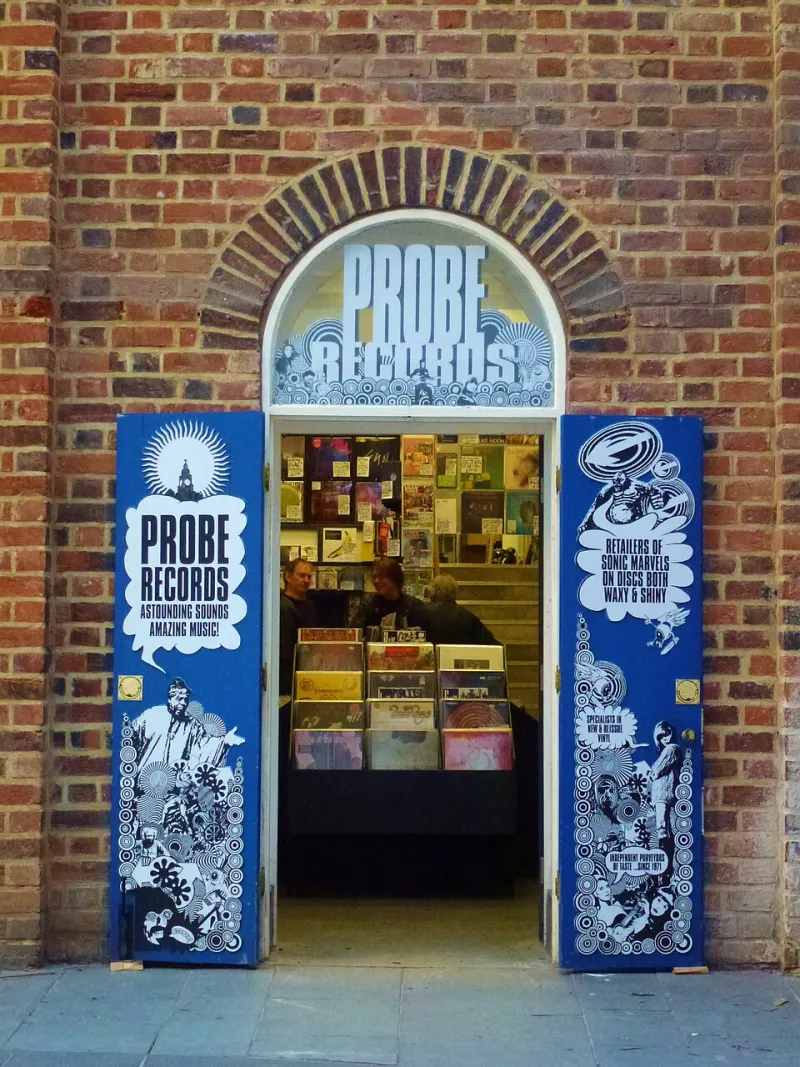
Photo: Radarsmum67, CC BY 2.0, via Wikimedia Commons
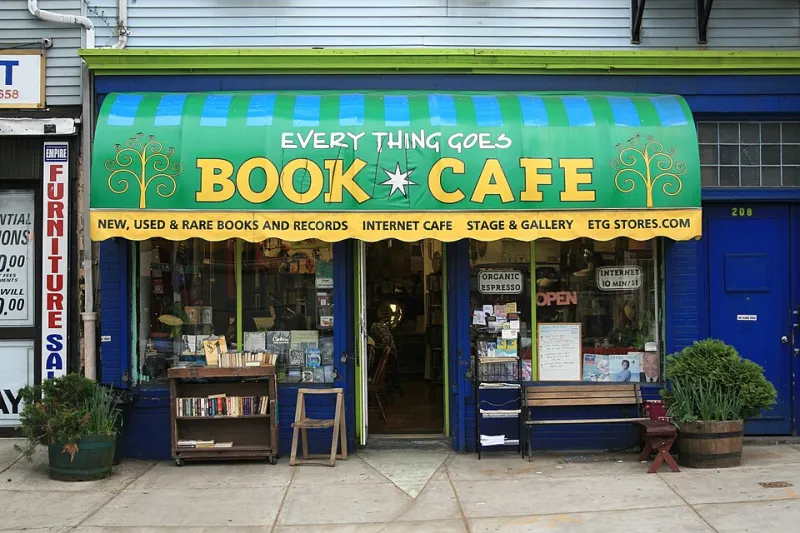
It's twenty past eight on a Thursday in Salford and the shop shut forty minutes ago. The shutters are half down, which is the universal signal for we're still in here, come round the side. Inside, the soul section has been shifted two feet to the left to make room for a borrowed PA, and about forty people are standing in a space designed for maybe fifteen browsing adults. Someone's brought a camping chair. Someone else is holding a pint they were told, gently, not to put on the counter.
The band — a three-piece from Rochdale who've driven over in a hatchback — play for thirty-five minutes. Nobody talks over them. That's the thing you notice first.
The Room Behind the Door
In-store gigs aren't new. Shops have been clearing a corner for a acoustic set since long before any of us were buying reissues. What's changed, and what's changed fast, is that the back room has stopped being a promotional gimmick and started being an actual circuit. There's a rough geography to it now. Basements in Bristol, stockrooms in Leeds, a yard with a corrugated roof in Glasgow that has, by common agreement, the best sound of the lot because the tin does something to the low end.
"We started doing them because a friend's band had nowhere to play that wasn't a pub with a telly on," says Naz, who runs a shop off the main drag in Salford and has been putting on roughly two nights a month since early 2026. "Now we get people emailing from Manchester asking to play. Not for money. Just to play the room."
Why Forty Beats Four Hundred
The obvious answer is sound. A back room with a low ceiling, a wall of records and a crowd of forty is acoustically forgiving in a way that a long concrete box with a 10pm curfew is not. You can hear a snare drum without it being mediated by a monitor engineer who's had a long day.
The less obvious answer is attention. There's no back bar to queue at, no smoking area to drift to, no screen. The records are the only decoration, and they're all facing you. People stand still. They listen. In 2026, in a country where a ticket for a mid-tier touring act now costs more than a week's food shop, that stillness has become the thing you can't buy anywhere else.
"You find out very quickly whether the songs work," says Cass, who plays guitar in a Leeds band and has done three back-room sets this year. "No lights, no fog, no barrier. Forty people looking at your hands. It's terrifying and then it's brilliant. We rewrote half our set after the second one because we could actually hear what we'd written."
A Keg, a PA and a Whip Round
The economics are lean and slightly improvised. Most of the shops we spoke to run on a five-quid-on-the-door model, split between the artists after the shop has covered the PA hire and a couple of crates of beer. Nobody's getting rich. The shop's return comes sideways: records sold on the night, mailing list sign-ups, and the fact that forty people now know where the shop is and that it's open till seven on a Friday.
"We make more on the night from the racks than from the door," says one Bristol owner, who asked not to be named because the licensing situation is, in her words, 'a movable feast'. "Which is the correct way round, honestly. The band gets the door, we get the browsing. Everyone leaves with something."
The friction points are real, though. PRS returns, neighbour complaints about a 10.30pm kick-out, the fact that a stockroom with one double socket can't run a valve amp and a fridge at the same time. Several shops have quietly moved to early-evening formats — 7pm doors, 9pm done — partly for the neighbours and partly because the audience for a Thursday listening session is not, by and large, an audience that stays out till two.
An Audience That Comes Back
Here's the part that feels genuinely new. The back room isn't drawing the usual gig crowd. It's drawing the shop's regulars, plus a friend, plus someone who came for a listening session and stayed for a noise band. In Leeds, a shop's monthly Thursday series has accidentally become the most reliable place in the city to see a decent jazz-adjacent improv act. In Glasgow, a Sunday-afternoon session has picked up a following among people who wouldn't dream of going to a gig on a Sunday night.
That cross-pollination is the point. A crate digger who came in for a Blue Note pressing walks out having bought a tape from a post-punk trio. That's a scene being built in real time, forty people at a time.
The Awkward Bits
Let's not pretend it's all candlelight. Sightlines are dreadful — if you're behind the jazz section you're watching a shoulder. It gets hot. There is one toilet and it's also the stockroom. Some nights the PA hums. Some nights the band is, frankly, not ready, and forty people are stuck in a room with them because the door is behind the counter.
And there's the etiquette problem that comes with any small room: the two people at the back having a full-volume conversation about a repress. Shops are getting better at it. A handwritten sign on the till that says quiet please, they're playing does more work than you'd think.
What to Watch in 2026
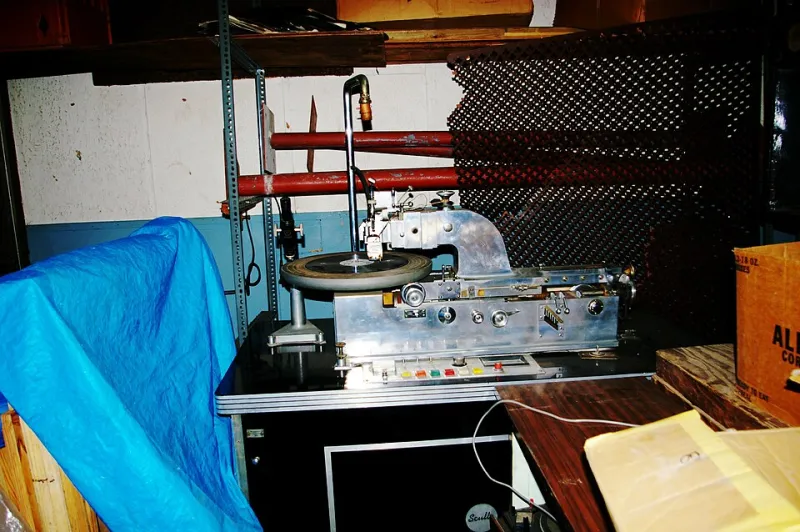
Expect more shops to formalise it — fixed monthly nights, proper mailing lists, a season announced in one go rather than a flyer two weeks out. A few are experimenting with all-dayers, with a lathe-cut record sold on the door as the ticket. The listening session, headphones and all, is quietly becoming the gateway format: lower risk, no PA, and it gets people in the room.
The risk is the usual one. The moment something is good, it gets ticketed, oversubscribed and full of people who've come to be seen at the thing rather than hear the thing. The shops that hold it together will be the ones that keep the door price low, keep the room at forty, and keep booking the band from Rochdale in the hatchback.
How to Get In
Follow the shops directly — this circuit doesn't advertise, it announces. Get on the mailing list. Turn up early enough to buy something. And when the band starts, stop talking. That's the whole ticket.