Pinboard Confidential: The UK Record Shop Noticeboard Is the Scene's Real Archive
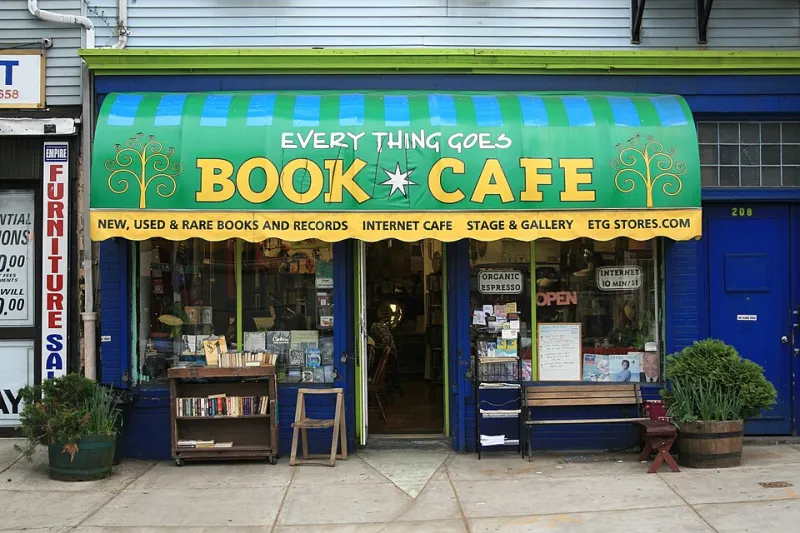
Photo: Dave Cook, CC BY-SA 3.0, via Wikimedia Commons
Record shops are built on diggers' instincts: check the racks, check the sleeves, check the condition. But there is another archive in most UK shops, and it is usually pinned to a corkboard behind the counter or taped to the inside of the window. It is messy, sun-faded and covered in staples. It is also the most honest document of a local scene you will find anywhere. In 2026, when every gig has a digital flyer and every DJ has a link tree, the shop noticeboard is still doing what it has always done: putting one scene's noise in front of another scene's people.
I spent a few weekends this autumn drifting between shops in Leeds, Bristol, Glasgow and London, mostly to look at boards. Not to buy, although that never quite works. The brief was simple: photograph what is there, ask who puts it up, and ask whether anyone is keeping it. The answers were part archive, part accident, part mild panic about the next window display.
The board by the till
A good noticeboard is a collision. Hand-drawn gig flyers sit next to in-store listings. Swap-meet cards overlap with zine launches. Someone has pinned a DJ wanted ad with a phone number torn into tabs. Someone else has added a lost dog notice, and the dog is called Biscuit. There is a poster for a night that happened last week, a poster for a night that has been rescheduled twice, and a card for a dubplate cutting workshop that sounds either brilliant or illegal.
The boards are not curated. That is the point. A record shop noticeboard is one of the last unmediated music listings in a UK city. You do not need an account, an agent or a press release. You need a pin, a spare corner and the nerve to put your thing next to someone else's thing. Shops exercise a light touch: nothing offensive, nothing political, nothing that will scare the neighbours. Otherwise, it is a free-for-all.
Leeds: pencil, staples and a lost dog called Biscuit
At Spindle & Sleeve, a shop tucked off Kirkstall Road, the board is by the counter and lit badly. That is how you know it is real. There is a hand-drawn flyer for a jazz night in a pub back room, a typed notice for a cassette swap, and a card advertising a 'turntable clinic' every other Sunday. The shop's owner, Cass, says the board fills up in waves. 'January is quiet. September is mad. Students, new nights, people who have just moved to Leeds and want to meet other people who own records.'
The best thing on the board is a lost dog poster. Biscuit, a terrier cross, last seen near the canal. Cass says Biscuit was found safe, but nobody has taken the poster down. 'It has become part of the board. If I take it down, people ask where it has gone.' That is the noticeboard in miniature: a temporary notice that becomes permanent by accident.
Bristol: layers of screen print
At Third Rail Records in Stokes Croft, the board is less a corkboard and more a layered archaeology of screen prints. You can see the edges of older flyers under newer ones. A pink club night from August peeks out from behind an October zine fair. A swap-meet card is held on with a drawing pin that has gone rusty. The shop's counter staff say they strip the board every few months, but only the top layer. The rest stays.
Bristol's board is where the city's overlapping scenes meet: soundsystem nights, punk gigs, free jazz, record fairs, bike repair workshops. The notices are not all music, but they all point back to the same network of rooms, pubs and community spaces. A flyer for a night at a local venue will sit next to a card for a PA hire company and a poster for a climate benefit. Nobody is filing this stuff. It goes up, it fades, it gets covered.
Glasgow: the listings economy
At The Groove Yard in Finnieston, the board is more orderly. A grid of A4 listings, each one with a date, a venue and a door price. In-store sessions, listening parties, a second-hand synth sale. The shop uses the board as a service for regulars: if you want to know what is happening in Glasgow this week, you look here before you look online. The staff keep a stack of spare pins and a roll of tape behind the till. 'People ask to put things up all the time,' one says. 'We say yes if it is local and it is not a scam.'
What is striking in Glasgow is the number of notices for things that are not gigs: a call for a drummer, a room to rent, a record cleaning service, a book group. The board is a local newspaper with no editor. It tells you what people need as well as what they are playing.
London: the back-room bulletin
At Crate Expectations in Peckham, the board is in the back room, next to the listening station. It is covered in overlapping flyers for club nights, zine launches, radio shows and one advert for a 'dubplate cutting taster session' that has been there so long the phone number has faded. The shop's owner says the board is 'the best and worst thing in the shop'. Best because it tells you what is happening. Worst because people pin things over other things until it looks like a papier-mâché accident.
London boards are more transient. Flyers go up and come down faster. The scene moves, the rents move, the nights move. The board is a reminder that the city's music culture is not just in the big venues. It is in the back rooms, the record shops, the community centres and the pub function rooms. The noticeboard is where those rooms advertise themselves.
Who is keeping them?
The honest answer is: almost nobody. Shops strip boards for window displays, for repainting, for a change of season. Flyers get binned. Swap-meet cards get lost. The lost dog poster stays until it turns to dust. A few shops photograph their boards for social media, but that is not an archive. It is content.
There are small efforts. Local studies libraries sometimes collect gig flyers. Music museums and archives take donations, but usually from names they recognise. The everyday stuff, the hand-drawn and the photocopied and the badly spelled, slips through. If you want to save it, start small: ask the shop, photograph the board in good light, note the date and the location, and keep the images somewhere that is not a phone camera roll. Do not strip the board. Do not take flyers without asking. Just document what is there before the next window display arrives.
Four noticeboards worth a detour in 2026
- Spindle & Sleeve, Leeds: best for hand-drawn flyers, local jazz and the Biscuit poster. Check the board by the counter.
- Third Rail Records, Bristol: best for layered screen prints and swap-meet cards. Look for the older flyers underneath.
- The Groove Yard, Glasgow: best for in-store listings and practical notices. A proper local service board.
- Crate Expectations, Peckham, London: best for zine launches, radio shows and workshop notices. Ask before you photograph.
The shop noticeboard is not precious. It is not designed to last. That is exactly why it matters. It is the scene talking to itself in pencil, staples and cheap paper. Long may it stay up.