Loft Rot and Long Players: The Slow Route From a Cleared House to Your Local Rack

Photo: Husky, Public domain, via Wikimedia Commons
There is a particular sound a house clearance makes when it arrives at a record shop. Not the crash of a dropped crate, but the soft, sad slump of cardboard that has spent fifteen years absorbing the damp. The tape gives way. The smell comes first: old carpet, cold brick, a ghost of cigarettes. Then the dealer sighs, because they already know roughly what is inside, and they already know they are going to buy it anyway.
The Call Comes in on a Tuesday
The route from attic to rack usually starts with a phone call or a message forwarded three times. A parent has moved into a home, or a flat is being sold, or somebody has died and the family cannot face the shelves. The language is nearly always the same: there is a lot of vinyl, we do not know what it is worth, can you come and look. In 2026 the volume of these calls is up. Downsizing, rent, bereavement, the slow unravelling of the spare room — all of it feeds the same pipeline. The attic dividend is real, but it is not glamorous. It arrives wrapped in bin bags and held together with masking tape that has gone furry.
A dealer in South Yorkshire tells me he now sets aside two mornings a week purely for house calls. He takes a torch, a folding crate, a dust mask and a bluetooth speaker so he can play things quietly without committing to a full setup. He also takes a mate, because attics are awkward and families sometimes need someone to talk to while the records are being boxed.
First Sort: Smell, Weight, Water
Back at the shop, the first sort has nothing to do with music. It is about condition. Damp is the enemy, and it announces itself before you see it. Records that have been stored against a cold wall will have a wave in the sleeve and a bloom of foxing on the paper. The vinyl itself might be fine, or it might have a milky haze that no amount of cleaning will shift.
Weight is a clue. A box that feels heavier than it should often means water has got in and the sleeves have swollen. A box that feels too light means somebody has already been through it, or the records have warped and shrunk away from the covers. Either way, the dealer is already calculating the ratio of keep to skip.
The keep pile gets cleaned. Not with a tea towel and a prayer, but properly — a vacuum machine if the shop has one, a spin cleaner if it does not, and a new inner sleeve regardless. The skip pile gets stripped for anything useful: inserts, posters, plastic outers that are still intact. Nothing is thrown away without being looked at twice.
The Family Bit
The awkward part is the family. They are often in the room while you work, or they ring the next day to ask whether you found anything interesting. This is where a good dealer behaves like a decent human being. They explain what they are doing, they do not lowball in front of a grieving widow, and they do not pretend a box of Mantovani is worth a fortune. They also know that some records should not be bought at all if the family wants to keep them. A single copy of a favourite LP is not stock. It is a memory.
Ethically, the house-clearance trade is a minefield of small decisions. Do you tell the family that the obscure folk private press in the corner is worth more than the rest of the box combined? Most dealers I speak to say yes, and then offer a fair price for it. The ones who do not tend not to last, because word travels in a small town.
What Actually Sells
The predictable stuff still moves: Bowie, Fleetwood Mac, Pink Floyd, the usual charity-shop suspects. But the interesting money is in the odd corners. British folk private presses from the 1970s. Library music with the right composer credits. Early grime and garage 12s that were bought by teenagers and never played again. Classical box sets, oddly, are having a moment with samplers and soundtrack people. And anything with a local postcode on the label will find a buyer faster than a dealer expects.
What to Look For When the Box Lands in Your Shop
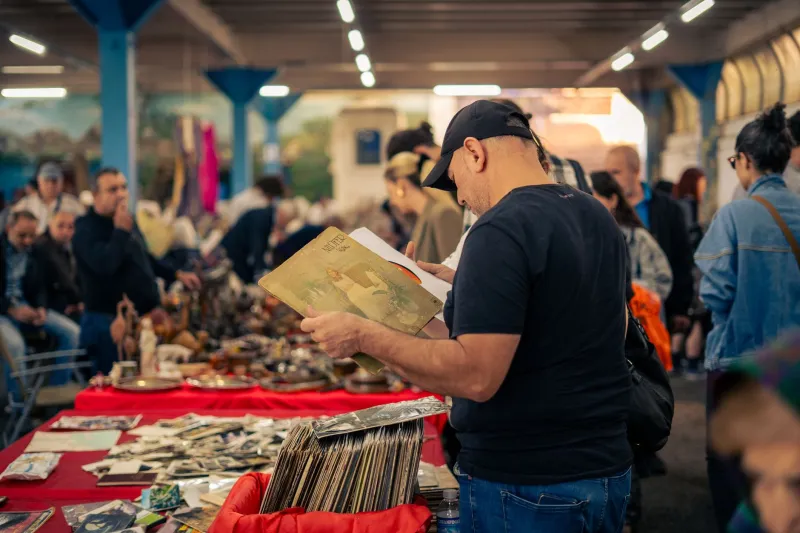
When a house-clearance box appears on the floor of your local shop, do not just flip through the front covers. Pull the records out. Check the vinyl, not the sleeve. Look for the tell-tale signs of a collection that was actually listened to: worn inner sleeves, a few pencil marks, a receipt from a shop that closed decades ago. Those records have been loved, and they often play better than they look.
Ask about the family. If the shop knows the story, the stock is usually better sorted and better priced. And if you see something that feels too personal — a dedication, a photo tucked inside a gatefold — leave it. Some things are not for the rack.
The Dividend
The attic dividend is not a gold rush. It is a slow, dusty, occasionally heartbreaking trade in objects that somebody once cared about. But that is exactly why it matters. Every clearance box is a small archive of ordinary British listening, and the shop floor is where it gets a second chance. Go and dig through it while it is still there.