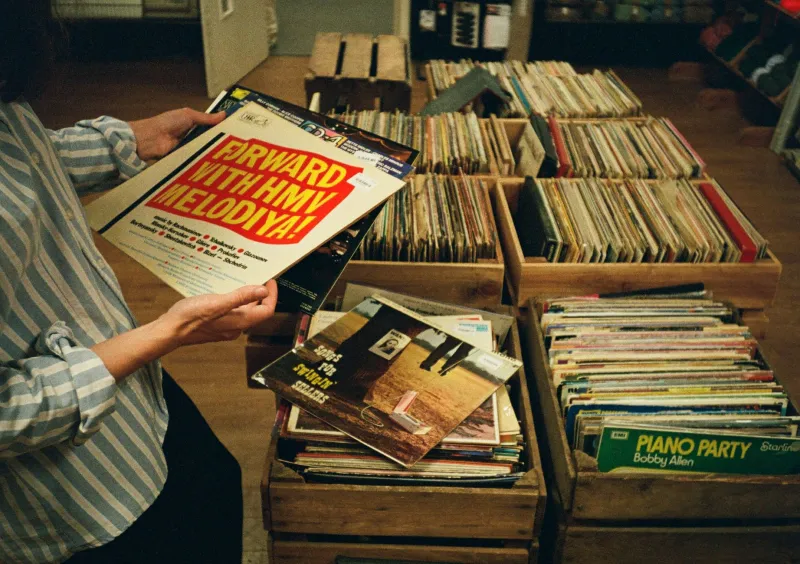
Handle With Attitude: The Record Shop Tote Is the UK Scene’s Walking CV

Photo: Siddharthchoudharystudio, CC BY-SA 4.0, via Wikimedia Commons
There is a particular sound a good record bag makes. Not the records themselves — the bag. A canvas tote with a bit of weight to it, slung over a shoulder, corner digging into your ribs as you flip through the jazz section. It creaks. It sags. It announces you before you have said a word. In 2026, the UK record shop tote is not merchandise. It is a walking CV.
The Bag That Says More Than a Discogs Profile
Anyone can build a Discogs shelf online. It takes about four minutes to add a rare 12-inch you have never actually heard, and nobody is checking. A bag is different. A bag is out in the weather. It has been on the bus, under a table at a fair, on the floor of a pub while someone argued about pressings. It has a coffee ring near the base and a faint smell of cardboard. That is not a flaw. That is the point.
At UK record fairs, bag-spotting is a quiet sport. You clock the handles first. A stiff cream canvas with a shop name in a blocky serif is one thing. A thin, faded carrier from a shop that closed years ago is another. The person carrying the second one has probably been doing this longer than you, and they probably know what the dead wax on that Northern Soul seven-inch should say. They are not showing off. They are just carrying their lunch and three LPs in the only bag that felt right.
From Plastic-Charge Pragmatism to Screen-Printed Status
The story starts with the plastic bag charge, not with streetwear. Once shops had to make customers pay for a flimsy carrier, the branded bag stopped being free advertising and became a small transaction. Some shops went cheap and grim. Others did the maths and realised a decent woven tote could be sold at a margin, used as a loyalty perk, or handed out with a big order. Since the charge landed in 2015, the shop bag has slowly climbed the status ladder.
Now the good ones are properly designed. Heavy cotton. Reinforced handles. A gusset that does not collapse the moment you put a gatefold inside. Screen-printed in one or two colours by a local printer, often with a design that looks like it was knocked up by someone who actually works in the shop rather than a branding agency in a glass building. That matters. The best bags look like they were made for people who carry records, not for people who want to look like they carry records.
What Collectors Read Into a Handle
There is a hierarchy, whether shops like to admit it or not. A plain white plastic carrier with a logo is entry level. A paper bag is almost disposable — fine for a tenner shelf purchase, not for a serious dig. A proper canvas tote is the real thing, especially if it is from a shop that does not ship internationally and does not have a big online store. The bag becomes proof of presence. You went. You were there. You bought something heavy enough to justify the fabric.
Collectors also read the condition. A pristine tote can look like it has never been used, which is either a sign of a new purchase or a sign of someone who keeps bags in a drawer. A battered tote is better. A tote with a torn handle repaired using a bread bag clip is practically a badge. It says: I am not precious about this, I just use it. That attitude travels well in UK shops, where earnestness is usually punished and quiet obsession is respected.
The Shop Floor Economics of a Good Tote
For independent shops, the bag is a strange little product. It is not a record. It does not sell for twenty quid. But it does three jobs at once. It carries stock, it advertises the shop around town, and it gives the counter something to sell when someone has spent all their money on wax and still wants to take something home. A good tote can be the difference between a customer leaving with a bag and a customer leaving with nothing but a receipt.
Some shops now do small runs with local artists. Others keep it simple: one colour, one logo, no fuss. A few use deadstock fabric or old shop banners cut and resewn, which is the sort of scrappy, resourceful move that fits the UK DIY scene perfectly. The worst bags are the ones that try too hard — oversized logos, slogans that sound like a marketing meeting, handles that cut into your hand after ten minutes. The best ones are almost boring until you see them in the right place, on the right shoulder, at the right fair.
Car Boot Rules: Bag-Spotting in the Wild
Car boots are where the tote gets tested. A record shop bag at a Sunday car boot is a signal. It says the person has come prepared, and they probably know which seller has the boxes under the table. You see them at 7am, hood up, canvas bag hanging low, flipping through a stack of dodgy compilations with the patience of someone who has done this hundreds of times. The bag has seen things. It has carried a £3 copy of a record that turned out to be worth forty. It has been put down in mud and picked up again.
There is etiquette, too. Do not ask someone where they got their bag unless you are prepared to talk for twenty minutes. Do not assume a shop bag means they work there. Do not stare at a rare tote like it is a museum piece. The whole point is that it is a working object. The moment you frame it, it stops being useful.
Wear It, Repair It, Pass It On
In 2026, the record shop tote has settled into something quietly important. It is not a trend piece. It is not a status symbol in the way a pair of trainers might be. It is closer to a library card or a favourite mug: ordinary, personal, slightly worn. The right bag says you have a shop you trust, a route you know, and a shelf at home that is probably too full.
So next time you are at the counter, look at the bag. Not the logo — the handles. The stitching. The way it sits when it is empty. A good record shop tote is a small, useful thing that happens to tell the truth about your taste. And in a scene full of loud claims, that is worth more than any online collection.