Cold Tea, One Glove and a Demo With No Name: What UK Shops Sweep Up After Closing
Photo: , Public domain, via Wikimedia Commons
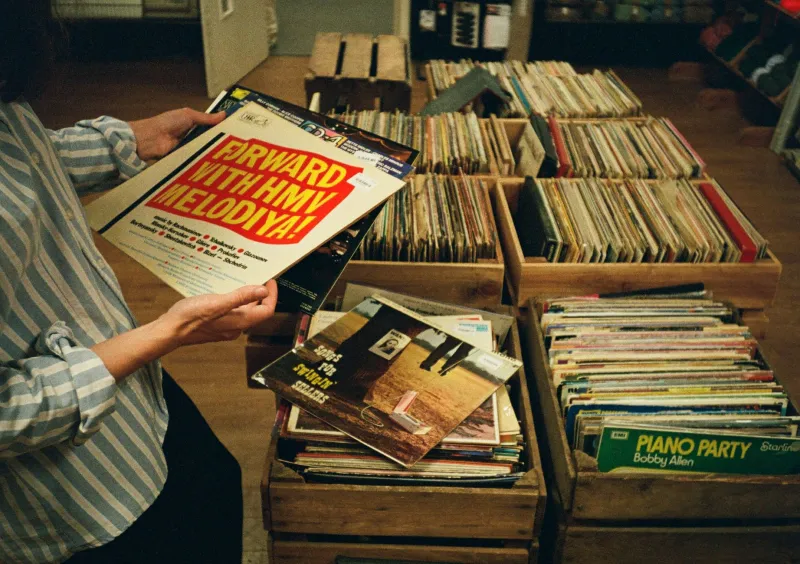
Closing time at a record shop is never quiet. There is the clatter of the shutter, the last card machine beep, the ritual shuffle of staff lifting a crate back under the counter. Then there is the pause. The one where someone spots a single leather glove on the floor by the soul section, a half-finished cup of tea going cold on the listening station, and a scrap of paper covered in catalogue numbers that looks like it was written by someone in a hurry. In 2026, the lost property box is still one of the most honest documents a UK record shop produces. It is not curated. It is not priced. It is just the debris of people digging.
The Shoebox Behind the Till
Most shops do not have a grand lost property system. They have a box. Sometimes it is a proper shoebox. Sometimes it is a cardboard fruit tray with a sheet of A4 taped to the front saying LOST PROPERTY in marker pen. One counter hand in Leeds told us their box lives under the till next to the spare stylus and the emergency roll of gaffer tape. Another in Bristol keeps theirs in a drawer that also holds the shop's own want list, which feels appropriate. The two things are cousins: messages from people who meant to come back.
The contents are rarely valuable in the traditional sense. A pair of reading glasses. A canvas tote. A bank card with no name that anyone can pronounce. A child's drawing of a record player that is genuinely better than most sleeve art. But every so often there is something stranger. A demo CD in a clear wallet with no name and no tracklist, just the word DEMO and a phone number that no longer connects. A single earring. A train ticket from a town two hours away. A laminated card explaining that the owner is deaf in one ear and prefers to be tapped on the shoulder. Staff remember the card. They kept it for months.
Gloves, Demos and the Half-Cup Problem
The glove is the classic. Always one. Never a pair. It suggests someone was digging fast, pulled a glove off to flip through a tight rack, and then left in a hurry with a record under their arm and a cold hand. The demo CD is the other recurring ghost. Shops get handed them constantly by artists hoping for a spin, a slot, a shrug of approval. Most go into the box because the staff feel bad binning them on the spot. The result is a small archive of UK DIY hope, unlabelled and slowly scratching itself to death in a shoebox.
Then there is the tea. Every shop has a half-cup story. One Manchester member of staff described finding a mug on a shelf in the back room with a skin on it so thick it looked like a mini terrain map. They binned the tea but kept the mug for a fortnight. No one claimed it. It became the shop's spare mug. That is the unspoken rule of lost property: some things get absorbed into the shop's own ecosystem. A lighter. A pen. A reusable coffee cup. The box is not just a holding pen. It is a slow transfer of objects from customer to counter culture.
The Want List Is the Real Diary
The most revealing item is almost always the want list. Not a neat spreadsheet printout. A proper one. Back of an envelope. Phone number in the corner. Catalogue numbers scrawled in biro. Maybe a name at the top, maybe just a first name and a rough description of what they are after: 'the one with the blue label', 'any British jazz on that logo', 'the 12-inch not the LP'. Staff read them like messages from the frontline of collecting. Some lists are clearly the product of months of searching. Others are a single line: 'anything by that band from Cardiff'. You can learn a lot about how someone digs from a dropped want list. The rushed ones. The over-planned ones. The ones where the handwriting gets messier as the list goes on, as if the person was running out of time or patience or both.
In 2026, want lists have not disappeared. They have just gone hybrid. People screenshot Discogs entries, write them on notes apps, then still scribble a few numbers on paper because it feels faster in the shop. Those scraps end up in the box. They are the closest thing the UK scene has to a real-time map of desire. And because they are left behind, they are also a reminder that digging is not a tidy process. It is a trail of clues.
Reuniting: When to Post and When to Keep Quiet
The ethics of the box are surprisingly nuanced. If an item has a name on it, most shops will send a message or stick a post up on their socials. If it is a bank card, they will ring the bank. If it is a demo, they will listen once, feel guilty, and put it back. If it is a glove, they will put it on the counter and hope. But there is a line. Staff do not want to become a lost property office for the whole street. They also do not want to embarrass anyone. One shop told us they once found a diary. They did not read it. They put it in an envelope and posted it to the address on the first page with a note saying 'found in the shop'. That feels right. Another shop found a phone with no lock screen and a stack of messages from a worried partner. They rang the emergency contact and handed it over without a word. The box is not a police station. It is a holding pattern.
The strangest finds tend to be the ones people do not come back for. A single boot. A jar of marmalade. A printed email confirming a wedding venue booking, folded into a seven-inch sleeve. Staff speculate about the stories, but they rarely get the ending. That is part of the appeal. The box is full of unfinished business, and the shop is just looking after it until someone remembers.
What the Box Says About Digging in 2026
The lost property box tells you that UK record buying is still a physical, distracted, hopeful activity. People come in with plans. They leave with records, cold hands, and a vague sense that they have forgotten something. In an era of saved searches and online carts, the box is a reminder that the best finds often happen when you are not looking. You are flipping too fast. You are talking to the person next to you. You are balancing a brew on a crate. And then you are out the door, one glove lighter, with a record you did not know you needed.
Shops do not advertise their lost property. It is not a feature. It is just a shoebox behind the counter, quietly filling up with the evidence of a good dig. If you have left something behind, ask. If you have not, have a look next time you are at the counter. You might see a want list that looks suspiciously like yours. And if you do, buy a record. It is the least you can do for the shop that kept it.